Friday, June 18, 2021

Creature Series 2: Bramblet

 Bramblet

Actually two species that have developed a symbiotic relationship to an unusual degree, bramblets are composed of a porcine mammal and highly-specialized plant related to common shrubs. Growing to a length of about two meters and a meter and a half tall, the animal portion of a bramblet belongs to the porcine family, related distantly to the common hog. Usually dark or mottled in complexion, they sport thin and wiry fur, but their most distinguishing feature is their companion shrub. These thorny plants are anchored into the back of the bramblet by their thin and flexible roots that penetrate the skin and blood vessels and hook into the bone. Bramblets have no nerve endings in their backs, and so this plant partner causes them no pain.


The bramble shrubs come in several varieties, some that produce berries or fruits and others that shed nuts. Containing the seeds of the shrubs, which only develop in living flesh, these products are vital to the bramblet life cycle. Rubbing against trees, they are picked up by male bramblets and chewed up before being deposited onto the backs of their juvenile young, allowing the seeds within to take root.


Because the shrubs require a great deal of sunlight, bramblets are usually found in plains, grasslands, hills and light forests. Omnivorous by nature, bramblets are voracious eaters, consuming everything from grass to carcasses. Some subspecies even develop larger tusks and sharper thorns and hunt live prey.


Hormone differences in bramblets produce different types of growth in their shrubs. Males’ shrubs typically grow taller and develop much brighter flowers, and are referred to as “crowns'' while females’ shrubs develop long viny branches that hang down around the bramblet, providing a protective wall for their young to hide behind, called “skirts”. They have developed a synchronous mating season, and while males strut and battle for attention from the females, the shrubs bloom and produce pollen. Some varieties require pollinating insects, and so swarms of bees can be found alongside mating bramblets. Pollen-producing types make their way to windy cliffs and can cloud the air with their pollen.


Berry-producing bramblets are often domesticated, as their fruit can be harvested and turned into a variety of goods. Special care must be taken to remove the seeds from the berries, as they can take root in the intestinal tract if consumed, producing a painful condition known as “thorngut” that can lead to death. The only effective treatment for thorngut is with an alchemical concoction created from the milk of a bramblet, which kills the bramble shrub in case of accidental ingestion by juvenile bramblets. Breeders are known to carefully pair shrubs to produce striking colorations and flower shapes, and competitions for bramblet appearance are not unknown. Bramblet meat is said to be a delicacy, but killing bramblets is frowned upon, as this prevents their other products from being harvested.


Other Types

Dire Bramblet: Growing up to four meters in length and up to three tall, these bramblets are larger and far more aggressive than their normal counterparts. Their tusks can grow up to 30 centimeters and develop a sharp piercing point. Their fur grows thicker and they develop a skirt of vines that keep enemies at bay and stick into their flesh with hook-like thorns designed to ensnare and rip. Shockingly fast despite their weight, they are adept hunters, and their carnivorous diet lessens their shrub’s dependence on light, giving its leaves a crimson tinge and allowing them to live in deep forests and caves.


AC 6 (13), HD 3+2 (15hp), Att 1x tusks (2d6 + shred), 

THACO 17, MV 150’ (50’), SV D12, W13, P14, B15, S16, 

ML 9, AL Neutral, XP 45, NA 1d6 (1d6), TT None

  • Shred: Upon a successful attack shreds the target’s skin and causes them to bleed for d6 damage at the start of their turn until an action is taken to close or bandage the wounds.


Killer Bramblet: A tragic misnomer, these sad creatures are thankfully rare. When a juvenile bramblet is separated from its family, it can instead be seeded by predatory bloodvine. Thought to be a cousin of the bramblet shrubbery, the bloodvine finds fertile ground in a young bramblet, allowing it to achieve a symbiosis not seen in other species. Covered in tendrils sporting razor-sharp thorns and specialized spines, these bramblets are unwitting accomplices as the bloodvine lashes out at any living creature that gets within range, enveloping it and feeding off its blood. The bramblet also benefits, as excess blood contributes to its growth. Extremely grim creatures, killer bramblets are sometimes found dragging the carcasses or bones of their own family, often the first victims of their murderous passenger.


AC 4 (15), HD 4+1 (17hp), Att 2x flailing vines (1d8 + blood drain), 

THACO 17, MV 150’ (50’), SV D13, W13, P14, B15, S16, 

ML 8, AL Neutral, XP 60, NA 1 (1), TT None

  • Blood drain: Upon a successful attack attaches to the victim and drains their blood: 1d3 automatic damage per round.

  • Detaching: If killer bramblet or victim dies, or if vines are attacked and hacked away.


Myconic Bramblet: Reanimated corpses overtaken by the myconic infestation, these undead creatures bear no resemblance towards their living forms. Most often they are found largely intact, bloated and sluggish, with their thorny shrubs totally replaced by broad-capped mushrooms or sail-like fungal growths. Their slow speed renders them less dangerous in combat, but their bite can still spread the infection, and once their fungal growth blooms they can release a massive number of infectious spores onto the wind, making them a priority for elimination.


AC 6 (13), HD 4+1 (17hp), Att 1x bite (2d4 + myconic infection), 

THACO 17, MV 150’ (50’), SV D13, W13, P14, B15, S16, 

ML 12, AL Neutral, XP 80, NA 1 (1), TT None

  • Myconic infection: Those exposed to myconic spores without appropriate protection must save vs. poison. On a failure, they become infected. See “The Myconis” for information on this fungus.

  • Bloom: The myconic bramblet may disperse its spores all at once in a 10’ radius around itself. Those who inhale the spores are subject to myconic infection. Additionally, the area around the bramblet provides cover with a -2 penalty to attacks against all those within. It persists for 1 minute.


Toxic Bramblet: Distinguished by their red flowers streaked with green or purple, these bramblets are solitary and protect themselves with a novel adaptation of their shrubs. When threatened, their flowers release a specialized type of pollen loaded with toxin that paralyzes and eventually kills anything that inhales it. Faster than normal bramblets, the toxic bramblet will then flee. They are not aggressive and have not learned to weaponize their toxin, but if backed into a corner they will release it in great quantities.


AC 4 (15), HD 3+2 (15hp), Att 1x tusks (2d6), 

THACO 17, MV 180’ (70’), SV D13, W13, P10, B15, S16, 

ML 8, AL Neutral, XP 60, NA 1 (1), TT None

  • Pollen cloud: When under duress, the toxic bramblet can release a misty cloud of pollen around itself that contains highly poisonous compounds. Creatures in a 15’ radius must save vs. poison. On a failure, they take d8 poison damage every hour until they die or are cured.


Rumors and Talk

  1. If the dangerous pollen of a toxic bramblet is ingested under the light of a full moon, it confers total immunity to their poison.

  2. Bramblet rustlers, outfitted with thick leather gloves and padded armor, operate out of the hills.

  3. The meat of an old male bramblet cures impotence.*

  4. Wild bramblets have very long memories, and will remember people who help or harm the herd.

  5. Intrepid smugglers hide illicit packages in bramblet shrubs to get them in and out of town unseen.

  6. Bramblet berries are actually full of their sweet blood.*

  7. The shrub is actually the entire animal, and the pig is just a complex decoy mechanism.*

  8. A ranger in the forest has a bramblet that produces golden berries.

*False


Adventures

  1. Bramblet herders are losing their flock to rustlers hiding out deep in the wilderness. The brigands do not respect the creatures’ lifecycle and simply slaughter them for their meat.

  2. A scholar from the city is paying for armed mercenaries to escort them into the wilds to observe bramblets in their natural habitat. A dire bramblet has taken up residence in the area and will attack trespassers.

  3. The preeminent menagerie of the nation seeks brave adventurers who can bring back a toxic bramblet for their new exhibit.

  4. A myconic bramblet has managed to turn its entire flock, and they are now wandering the countryside, directed by the myconic intelligence to infect small towns. A bounty has been placed on their destruction.


Encounters

  1. An unseeded juvenile bramblet is found wandering on its own. Initially fearful, it will warm to anyone who feeds it. The flock is nearby, looking for the lost one.

  2. 2d4 bramblets and 1 dire bramblet. A spear is lodged in the dire bramblet’s side, covered in blood (not hers), but has an obsidian head worth 20gp.

  3. 1d4+1 bramblet herders and a flock of 2d8+2 bramblets. They are passing through and will trade bramblet berries for 5sp/bundle.

  4. A killer bramblet, its vines wrapped around the corpses of an ox and a human, draining their blood. The bramblet is trying to escape, but the vines hold it in place. If the host or itself is threatened the bloodvine will strike.

  5. 3 ogres, 2 crowded around one that has eaten a thorny variety of bramblet and now has a mouthful of brambles. They are not initially hostile and will welcome anyone small and brave enough to reach into the ogre’s mouth and pull out the thorns stuck inside. As a reward they will offer 100gp and a potion of healing (2d4).

  6. 1d6+2 brigands suffering from poison. A toxic bramblet lies dead nearby. They will succumb to the disease if not cured. They are bearing an official writ of permission to hunt the creature, with a stated bounty of 120gp. If anyone attempts to take it and claim their kill they will fight to the death. If they are cured, they will agree to part with it as thanks.


Items

  1. Thorngut Surprise: Small seeds harvested from bramblet berries, they can be added to food and ingested. Anyone who eats the seeds must save vs poison. On a failure, they will develop thorngut symptoms within 1d6 weeks. After the first onset of symptoms, this condition is fatal after one week. The only cure is bramblet milk. Often used by assassins in lands with no bramblet populations, it produces a very painful death.

  2. Bramblewine: Made from the berries or fruit of bramblets, this wine is extremely potent. There are many flavor varieties.

  3. Thistlecake: Nuts shed by bramblets can be used to create a flour, which is then baked into this thin and tasty bread with a natural sweetness that makes it highly sought after.

  4. Partisan’s Friend: Dead or shorn branches from a bramblet can be harvested for their thorns. Properly treated, they can easily be shaped into wooden caltrops that are no less sharp than their metal counterparts. Supremely cheap and plentiful, these are often used by rebel forces to hamper occupying soldiers.

  5. Bramblet Milk: The milk produced by bramblets is used to treat thorngut, and is otherwise just a satisfying drink.

  6. Rancher Mitts: Thick gloves reinforced with bramblet hair. Wearers can safely touch, grapple and otherwise interact with bramblet shrubs or other thorny or spine-covered surfaces including bloodvine.

  7. Miracle Marrow: The bones of a bramblet are used as anchors by the roots of the plants that sit upon their backs. Those same bones are marvelous fertilizer. An application of this mealy white powder can cover a 20’ surface of earth. Plants will grow much faster than usual in the area. An application of blood will speed this process even further.

  8. Dried Bramblet Tail: An irresistible delicacy, these tails are prized among monster slayers for their attractive properties. Carnivorous creatures are drawn to this treat, and will pursue it at all costs, even ignoring other prey to devour it.

  9. Toxidart: Using hollowed spines and concentrated pollen from a toxic bramblet, these darts make for a deadly weapon. Those hit by the darts are subject to the poison effect detailed under the toxic bramblet’s “Pollen cloud” ability.

  10. Bramblepelt: A leather coat fashioned from bramblet hide. Its innate resistance to thorns gives its wearer protection from piercing attacks, which deal half damage.

Friday, February 19, 2021

Creature Series 1: Tuhl-bat

Cousins to the common barn bat, tuhl-bats are distinguished by their shaggy yellowish fur and total lack of eyes. Extremely adaptable scavengers, they use their unique ability to get at food that other creatures cannot. Tuhl-bats are capable of teleporting short distances, around half a meter, through solid objects. Somehow they are not bound by the usual rules of teleportation, and may be able to sense space through barriers. They are able to “skip” across extended distances, teleporting in small jumps, allowing them to cross much larger distances than traditional flying creatures of their diminutive size.  


Though they do eat the normal bat diet of small insects and fresh fruits, their teleportation ability allows them to enter enclosed spaces through unusual angles. This makes them a prime pest species. Many a farmer has found their grain picked at by tuhl-bat swarms and there is no warehouse or pantry that they cannot skip into and raid. Those wishing to prevent tuhl-bat pests from getting their way have learned to keep their stores inside of wooden or metal boxes that their sharp claws and teeth cannot tear into. Additionally, keeping a supply of cotton or loose cloth to stuff into any empty space will prevent the tuhl-bats from entering these secured spaces.


Rumors and Talk

  1. Tuhl-bats are not natural creatures. Some wizard up north created them to torment his neighbor to the west and never bothered to check whether they breed true.

  2. If you come across a bunch of yellow fur lying on the ground, tuhl-bats have been mating nearby.

  3. They hate the smell of elderberries. Put them along the walls of your storehouse and they’ll stay away.*

  4. Juvenile tuhl-bats are a delicacy amongst the sea-nobles, they’ll pay 10gp per kilo.

  5. There is a master thief named Condle who is said to train tuhl-bats and use them as part of their infiltrations.

  6. Because their nests are in such hard to reach places, they almost always share with ethereal filches.

  7. Tuhl-bats actually do have eyes, they just exist only in the astral plane.*

  8. After being blamed for the Orange Famine, tuhl-bats are kill-on-sight by order of the king.

*False


Adventures

  1. A massive swarm of tuhl-bats have been moving across the countryside, devouring all food in their path. The elders of a farming village have put out a bounty on stopping them.

  2. A possibly-mad inventor wants 100 tuhl-bat hides for a teleportation device. The only known nest of them nearby rests deep within the abandoned mines.

  3. Careless use of stone shape has inadvertently trapped a nest of tuhl-bats inside a cave adjacent to an ancient dwarven tomb. Their shrieking is disturbing the mummies within and the crypt-watchers want the situation resolved.

  4. Hunters attempting to supply the sea-nobles’ extravagant tastes are overhunting the tuhl-bats. The local druidic circle is requesting that enterprising individuals put an end to the practice.


Encounters

  1. A swarm of tuhl-bats engaging in their mid-air mating ritual descend on the group. Their chirping draws other beings. Roll twice for an additional encounter, using both.

  2. A wandering merchant offers trained tuhl-bats to those with 5gp per head. (They are not trained).

  3. d4+1 crazed hermits who have dyed all their hair yellow. Against all odds, they are weretuhl-bats.

  4. A questing knight who has sworn to bring back an albino tuhl-bat to impress the love of their life. They are growing hungry and dehydrated and will pay generously for information on their quarry.

  5. A ring of tuhl-bats sit bizarrely in a ring on the ground, facing inwards. They are fixated upon a door to the astral plane that cannot be seen with the naked eye.

  6. A young tuhl-bat lies on the ground, chirping weakly. If nursed back to health and properly trained it will become a devoted pet.


Items

  1. Tuhl gloves: Fashioned from the skin and fur of tuhl-bats, these gloves most often extend up to the shoulders, but more unobtrusive versions end at the wrists. They allow the wearer to reach through solid objects up to the hem of the glove.

  2. Astral sight potion: Made from the juices of tuhl-bat glands, the crafting of this potion is a trade secret. It allows the imbiber to see into the astral plane for up to an hour. They may see through solid objects in the material plane with concentration.

  3. Blink bombs: Small charges composed of tuhl-bat bones and wing membranes, these gunpowder-filled explosives can be lit and then flung through solid surfaces, passing through up to a meter of material. Deals 1d6+2 damage.

  4. False dagger: A blade treated with preserved tuhl-bat blood, it is incapable of stabbing, passing harmlessly through any material it encounters. Perfect for faking assassinations with some fake blood, and popular among pacifists who still wish to defend themselves.

  5. Ethereal net: Thin ropes of finely-woven tuhl-bat fur are fitted into a bright yellow, thin net. Any ethereal creatures attempting to pass through are caught. Not particularly strong, it is mostly used to stop other tuhl-bats but it can be used to pinpoint the location of otherwise untouchable beings.

  6. Phase shift: Dried tuhl-bat droppings can be burned and the fumes inhaled to allow the inhaler to project their consciousness into the astral plane. Lasts for an hour.

  7. Lesser portable hole: Made of specially treated tuhl-bat wing membranes soaked in their blood, these round, flexible discs may be affixed to a solid wall and will create a hole up to a meter deep within. Fundamentally unstable, lasts d4 rounds.

  8. Tuhl wine: Berry juice that has been fermented in a special bladder made of tuhl-bat stomach, this alcoholic beverage is sweet with an acrid aftertaste. The next time a drinker awakes, they will find themselves in a randomly-determined hex adjacent to the hex they went to sleep in.

  9. Slip oil: Squeezed from the soaked bones of a tuhl-bat, this oil can be applied to an object no larger than an apple. Within seconds the object disappears, whisked away into the ethereal plane. This effect lasts for up to a day, with thicker coatings lasting longer.

  10. Tuhl ablution: A special grease distilled from boiled tuhl-bat meat. When applied to an arrow, bolt, sling stone, bullet or other type of ammunition, that ammunition passes through the first solid object or person it encounters before rematerializing. A single dose covers 10 objects (ud8).

Thursday, May 28, 2020

Drugs and Dragons


Here's the story of how drugs were my slippery slope into the world of tabletop RPGS.

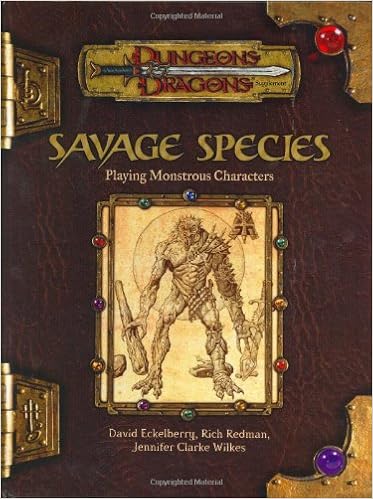
I was always into the idea of playing D&D ever since I bought a copy of the 3.0 Monster Manual from a bookstore in the mall two towns over in middle school. I had no idea what 2d8 meant or how to use most of the information contained in the book but the pictures were cool and I liked reading the entries. Eventually I would blow my money I earned at my job washing out self-service car wash bays on the Player's Handbook and Dungeon Master's Guide, as well as the core rules to Aberrant of all things. I would head down to the comic book store and pick up oddball rules supplements for GURPS like Bio-Tech, Mecha, Cthulhupunk and Space. I owned things like Savage Species and Oriental Adventures, and I even paid a high school friend $10 for four copies of RIFTS and one random Robotech book.

Seriously, does anyone remember this book?

But all through this I never actually played any of these games. My friends were never that interested, I didn't own the correct kind of dice, and more than anything else I just couldn't get around to other people's houses in rural Georgia. Between school, work and taking care of the family farm I didn't have a lot of time for socializing. So those books wound up dog-eared and their bindings are suspect today but I never got the chance to use them.

In college, I made friends who got me into a variety of new stuff that we didn't have much of in my small town, including drugs. Starting out with weed, I eventually got into psychedelics and narcotics as well. While I enjoyed the numbing effect and distant euphoria of that last category, it never quite took hold of me like it did in others. So when I had to get my wisdom teeth out and left with a prescription for a bottle of pre-opioid epidemic hydrocodone, I thought they would be purely medicinal for me. Turned out the operation had a quick recovery time and I was left with a mostly-full bottle of pills. I took a few for fun, passed some out to friends, but eventually one of my buddies hooked me up with a guy at a party who wanted to buy them off of me for a very generous $15/pill.

This was 2008, before I had gotten a job on campus, so I spent most of my time strapped for cash. My college was paid for by the state through a program for the disabled (losing that foot paid off I guess) and so most of my money needs were for extraneous shit like movie tickets, video games and restaurant meals. This was a decent chunk of change for me, so I took him up on it. 

We met in a dark employees-only parking lot behind a local gas station and made the exchange. With the money burning a hole in my pocket I looked for a way to spend it. At the time I was a fan of the webcomic Penny Arcade (how the mighty have fallen) and they had been putting out a podcast where they played D&D 4th Edition. The game sounded like a lot of fun, it was something I had always wanted to get into, and my nerdy friends were also into the idea, so I took my drug money and purchased the 4th Edition core books.

We had a blast. I cooked up a zany set of adventures about a crew of last-chancer convicts in a city ruled by cruel corporations sent out on suicide missions. In our first adventure the party investigated a spate of disappearances of autons (ersatz warforged) and eventually battled a shotgun-wielding goblin scientist in his scrapyard laboratory. We were all hooked and that campaign lasted for several years, going all the way to epic levels. 

Later on we would transition into 13th Age, which we also loved. As so many campaigns do that game became weighed down by a bizarre binder of houserules and custom powers and creaked under the weight of itself. Eventually I graduated (5 years baby) and our campaigns came to an end as everyone moved away to get jobs and start families. I didn't do much in the hobby for a few years, but eventually I discovered online roleplaying, found a good community and got back into the swing of things. I found that 5th Edition held no appeal for me, as it abandoned the grid-based tactical combat that I loved and stripped out the fun powers that my players had enjoyed using (not to mention its development included the contributions of some shitty people and thus it will never get any money from me) and so I moved on to a variety of systems. FATE Atomic Robo was used for a play-by-post campaign of pulp action in 1920s Hong Kong, and I ran 2 years and 2 campaigns worth of stuff using the 4E descendant Strike! which I love quite dearly.

This header for my Atomic Robo game generously provided by one of my players, Fuego Fish.

I discovered the Powered by the Apocalypse engine and had a lot of fun playing Dungeon World and running Monster of the Week. Stars Without Number and Beyond the Wall got me started in OSR games and I soon supplemented that experience with some Black Hack 2E and a one-shot of Silent Legions. I became a big fan of the Forged in the Dark engine, and ran twin campaigns of Scum and Villainy and Blades in the Dark at the same time. I found great appeal in Shadow of the Demon Lord and am still running it to this day, while at the same time dabbling in the Resistance system through Spire. I had always been homebrewing, and somewhere in there I began to dabble in actual design work as well.

Today I'm interested in the OSR scene, picking and choosing what I like from the old-school principles, and I'm injecting those ideas into my own work. Currently I am building a mad synthesis of the OSR, FitD, PbtA and others and I hope to start playtesting this weird mess of a game soon.

So let my story serve as a warning: drugs are a gateway to weirder things, like pretending to be a goblin apostle stuck in a swamp full of vampires, or designing your own intricate factional conflict systems, or writing up dozens of random tables to determine the contents of a nameless bandit's pockets. 

My advice: stick to drugs.